BuildASoil
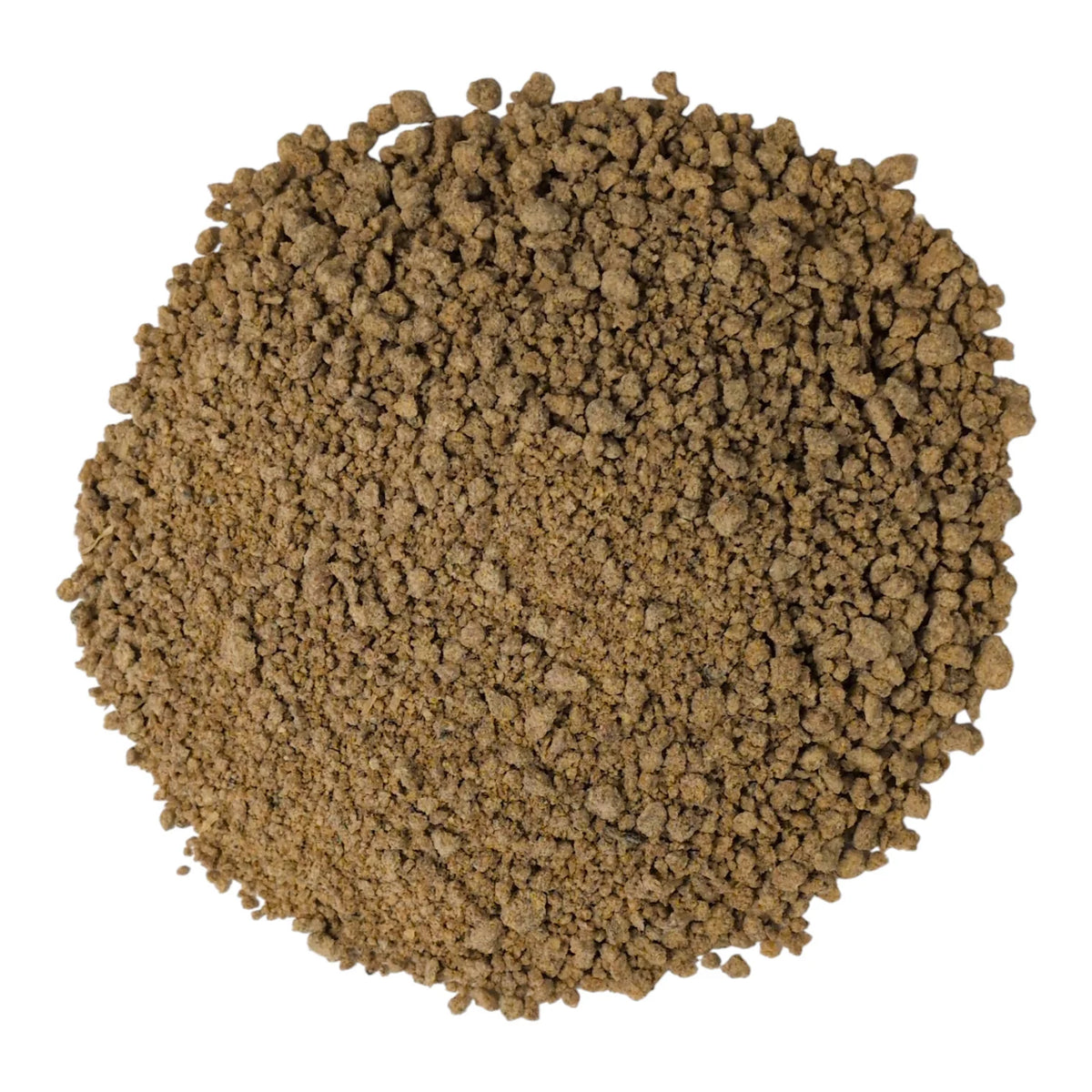
BuildASoil Kashi Gold 2 lb
BuildASoil Kashi Gold 2 lb
Couldn't load pickup availability
Solid state ferment, made by hand
Put the biology where the food is
You already have compost, castings, and dry amendments sitting under your mulch. Whether any of it reaches the plant comes down to the biology working that layer. Kashi Gold is EM-1 fermented onto a rice bran carrier, which means you can put that culture exactly where the food is, in a form that stays put and brings its own meal along with it.
4.9 out of 5 from 63 reviews, 97 percent would recommend it
What it does up there
Three things start happening in the mulch layer at once
It is a live culture on an edible carrier that feeds your plants as well as your biology. When it lands on a moist, covered layer it goes to work in three directions at the same time.
One application, sprinkled on the mulch
Everything below happens in the same layer, in the same week, from the same handful.
It works on the amendments you already put down
The probiotic culture goes after the material sitting in that layer, your mulch, your compost top dress, your dry amendments. That is the whole reason it belongs on the surface instead of tilled in. The food is up there, so the biology goes up there.
EM-1 culture
The carrier is a meal in its own right
Rice bran is not inert filler holding the culture together. It is a rich food source on its own, high in phosphorus and oil, and it feeds the layer whether or not there is anything else up there for the biology to work on. The finished product tested at 7.59 percent phosphorus, which makes Kashi Gold a strong flowering fertilizer on its own.
High phos rice bran
Minerals and nutrients arrive already fermented
Basalt rock dust brings a broad mineral profile, and minerals are the cofactors enzymes run on. Black soldier fly frass brings a wide range of nutrients plus a small amount of chitin. Both went through the ferment before they ever reached your bag, so they arrive already worked rather than sitting on the surface waiting their turn.
Basalt rock dust flourBlack soldier fly frass
The other two inputs, sea salt and organic cane molasses, do their work before the bag is sealed. They are there so the fermentation finishes correctly, which is Alan's job, not yours.
Bucket versus bed
Almost all bokashi in the world is sold to ferment kitchen scraps
That is a good use for it. It is not this use. Bran inoculated for a sealed bucket is formulated to pickle food waste in an airtight container over two weeks. Bokashi for a living bed has a different job, and if you have been buying the bucket kind and sprinkling it on your garden, you have been using a tool slightly off label.
Bucket bokashi
- Formulated for a sealed anaerobic container
- Job is to ferment food waste before it goes in the ground
- Usually bran plus a culture, priced as a consumable
- Nothing in it is chosen for what is already living in your bed
Kashi Gold
- Built for the mulch layer of a living, planted bed
- Job is to cycle the mulch, compost, and amendments already there
- Carries rock dust, frass, and mineral salt alongside the culture
- Made in small batches by the person who designed the category
What is in it
Six inputs, and a reason for each one
How to use it
Sprinkle it on the mulch, water it in lightly, leave it alone
This is a surface product. It works at the mulch and soil interface, so do not till it in and do not bury it. Put it where the moisture and cover are.
| Use | Rate | Frequency |
|---|---|---|
| Top dress, established beds and containers | 2 to 4 tablespoons per square foot, across the mulch layer | Every 1 to 3 weeks |
| New beds, or heavy fresh mulch | Handfuls tossed in as you build the layer | At setup, to get activity started |
| Compost pile boost | Half a cup to 1 cup per cubic foot of compost | As you turn or build the pile |
What a bag actually covers
Kashi Gold weighs about 4.25 ounces per cup, so a 2 pound bag is roughly 7.5 cups, or about 120 tablespoons. At the top dress rate that works out to somewhere between 30 and 60 square feet per application depending on whether you go light or heavy.
In practical terms, one bag gives you two to four full passes over a 4 foot by 4 foot bed.
Store it somewhere animals cannot get to it. This is the single most common thing that goes wrong with Kashi Gold, and it is not a plant problem. Dogs, chickens, and mice will find an open bag and eat the whole thing. Keep it sealed, cool, and dry, which also preserves viability. A solid state ferment stored properly stays good for years.
Lab tested
Finished product analysis by Spectrum Analytic, lab number FF73155, sampled September 17, 2026. One batch, not a guaranteed analysis.
What runs with it
Kashi Gold cycles what you put down, so put something down
The standard order is the same whatever soil recipe you are running. Amendments on the soil surface, mulch over the top of them, then Kashi Gold on the mulch.
Share